Asthma Awareness: Common Triggers, Symptoms and When to Seek Medical Advice
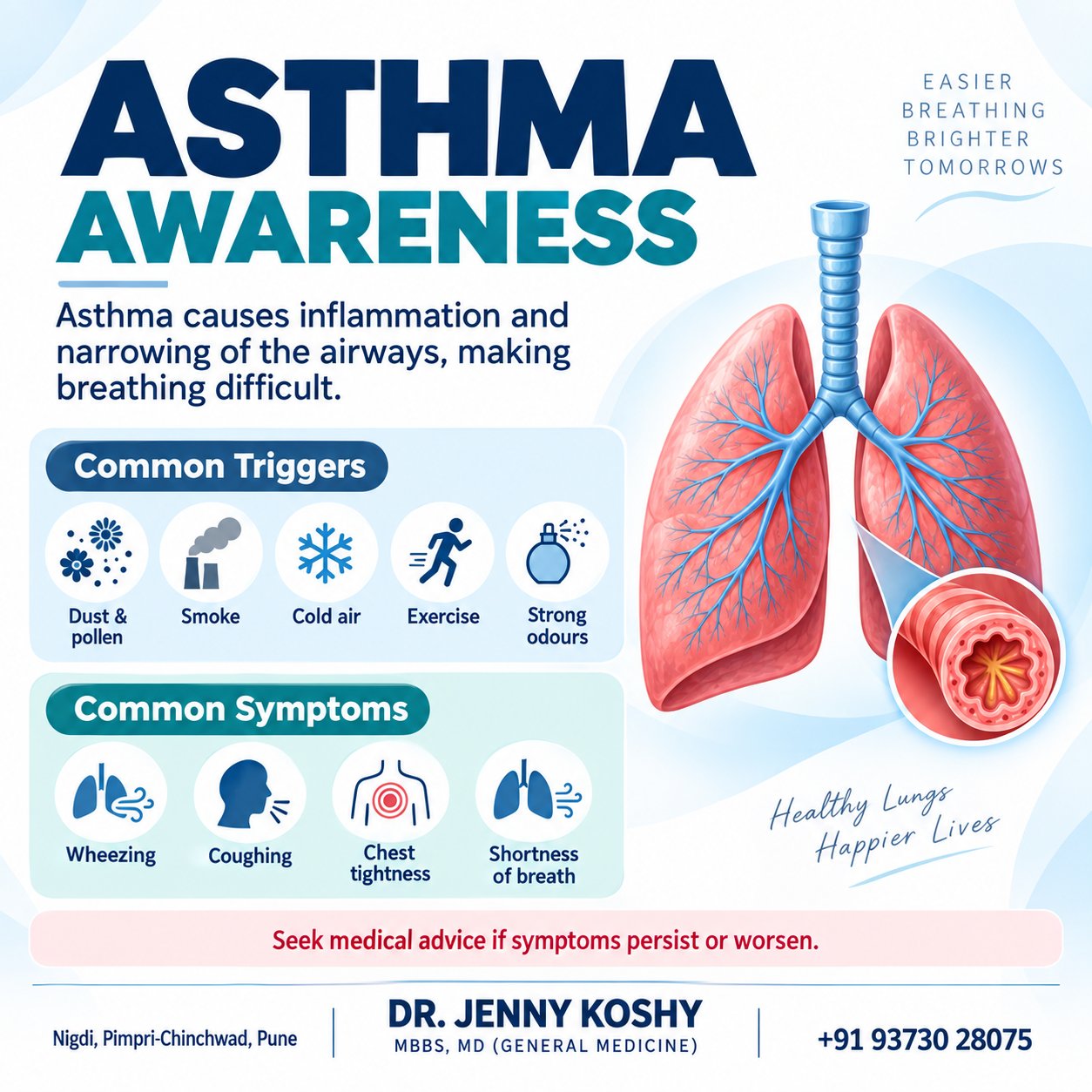
Asthma is a long-term condition that affects the airways and can make breathing difficult. The airways may become inflamed and narrower, which can lead to symptoms such as wheezing, coughing, chest tightness, and shortness of breath. Symptoms can vary from person to person and may appear occasionally or more frequently. Understanding common asthma triggers and recognising changes in breathing can help people discuss their symptoms with a healthcare professional. A General Physician in Nigdi, such as Dr. Jenny Koshy, can assess respiratory symptoms and advise whether further evaluation is appropriate.
What Is Asthma?
Asthma affects the airways that carry air into and out of the lungs. In people with asthma, the airways can become sensitive to certain triggers. Exposure to a trigger may cause inflammation, tightening of the muscles around the airways, and increased mucus production.
These changes can make it harder for air to move through the airways. The severity and frequency of symptoms can differ between individuals. Some people may experience symptoms mainly during certain seasons or after exposure to specific triggers, while others may have more frequent symptoms.
Asthma is a condition that requires individual medical assessment. Breathing difficulties should not automatically be assumed to be asthma because several other respiratory conditions can cause similar symptoms.
Common Asthma Triggers
Different people can have different asthma triggers. Identifying patterns may help when discussing symptoms with a doctor.
Common triggers may include:
Dust and pollen: Environmental allergens can trigger respiratory symptoms in some people.
Smoke: Cigarette smoke, burning materials, and other forms of smoke may irritate the airways.
Cold air: Breathing cold, dry air can contribute to symptoms for some individuals.
Exercise: Physical activity can trigger breathing symptoms in certain people, particularly when asthma is not well controlled.
Strong odours: Perfumes, cleaning products, paints, and other strong smells may irritate sensitive airways.
Respiratory infections: Colds and other infections can sometimes worsen asthma symptoms.
Air pollution: Pollutants and poor air quality may affect people with sensitive airways.
Keeping track of when symptoms occur and what was happening before them can provide useful information during a medical consultation.
Common Symptoms of Asthma
Asthma symptoms can range from mild to severe. Common symptoms include:
Wheezing
Wheezing is a whistling or high-pitched sound that may occur while breathing. It can be more noticeable during certain asthma episodes.
Coughing
Some people may experience repeated coughing, particularly at night, early in the morning, or after exposure to a trigger.
Chest Tightness
A feeling of pressure, tightness, or discomfort in the chest may occur during asthma symptoms.
Shortness of Breath
Some people may feel that they cannot breathe comfortably or get enough air. Shortness of breath can have many causes, so medical assessment is important when it is persistent or unexplained.
Symptoms may occur individually or together. Their frequency can also change depending on triggers, infections, environmental conditions, and other factors.
How Triggers Can Affect Breathing
Asthma triggers do not affect everyone in the same way. For one person, dust or pollen may be associated with symptoms, while another person may notice symptoms after exercise or exposure to smoke.
Recognising individual patterns can be useful. For example, if coughing or wheezing repeatedly occurs after exposure to a particular substance, this information can be shared during a medical appointment.
Avoiding known triggers where reasonably possible may help reduce exposure. However, avoiding triggers alone is not a substitute for appropriate medical evaluation or prescribed asthma management.
Asthma and Respiratory Infections
Respiratory infections can sometimes worsen asthma symptoms. A person who already experiences asthma-related breathing problems may notice increased coughing, wheezing, or shortness of breath during or after an infection.
It is important to monitor changes in symptoms and follow the treatment plan provided by a healthcare professional. New, severe, or rapidly worsening breathing difficulties require prompt medical attention.
When Should You Consult a Doctor?
Medical advice can be appropriate when breathing symptoms are persistent, recurrent, unexplained, or interfering with daily activities.
You should consider discussing symptoms with a healthcare professional if you experience:
Repeated episodes of wheezing
Persistent or recurring cough
Chest tightness
Shortness of breath during routine activities
Breathing symptoms after exercise
Symptoms that repeatedly occur after exposure to dust, smoke, pollen, or strong odours
Breathing symptoms that disturb sleep
A General Physician in Nigdi can review the symptoms, medical history, possible triggers, and existing reports. Depending on the findings, the doctor may recommend further respiratory evaluation or consultation with an appropriate specialist.
How Asthma Is Evaluated
There is no single symptom that confirms asthma. A doctor may ask about the pattern and duration of symptoms, possible triggers, previous respiratory problems, allergies, family history, and exposure to smoke or other irritants.
A physical examination may also be performed. Depending on the individual's symptoms and medical history, the doctor may recommend breathing tests or other investigations.
Tests such as spirometry can help assess how well the lungs are working. The need for specific testing depends on the person's symptoms and clinical assessment.
Managing Asthma Over Time
Asthma management is individualised. Depending on the diagnosis and severity, a healthcare professional may recommend prescribed medicines, trigger management, monitoring of symptoms, and regular follow-up.
People who have been prescribed inhalers or other asthma medicines should use them according to medical instructions. It is important not to start, stop, or change prescribed medicines without discussing it with the treating healthcare professional.
Keeping track of symptoms can also be useful. Recording when symptoms occur, possible triggers, nighttime symptoms, and any changes in breathing may help during follow-up appointments.
Practical Steps for Better Asthma Awareness
Understanding your own symptoms can be an important part of managing respiratory health. Consider keeping note of:
When breathing symptoms occur
Possible environmental or activity-related triggers
Frequency of coughing or wheezing
Whether symptoms affect sleep
Any changes in exercise tolerance
Previous respiratory infections
Medicines currently being used
This information can help a doctor understand the pattern of symptoms and decide whether additional assessment is required.
Frequently Asked Questions
1. What are the common symptoms of asthma?
Common symptoms include wheezing, coughing, chest tightness, and shortness of breath. Symptoms can vary in frequency and intensity between individuals.
2. Can cold air trigger asthma symptoms?
Cold air can trigger breathing symptoms in some people with asthma. The response varies from person to person.
3. Can exercise cause asthma symptoms?
Physical activity can trigger breathing symptoms in some people. If symptoms repeatedly occur during or after exercise, discuss them with a healthcare professional.
4. Can asthma symptoms be caused by allergies?
Allergens such as dust and pollen can trigger symptoms in some people. However, not every person with asthma has the same triggers, and medical assessment is needed to understand individual symptoms.
5. When should breathing difficulty receive urgent attention?
Severe or rapidly worsening breathing difficulty requires prompt medical attention. If a person is struggling to breathe or has severe symptoms, urgent medical care should be sought.
Supporting Respiratory Health With Medical Evaluation
Asthma awareness begins with understanding common symptoms and recognising factors that may affect breathing. Dust, smoke, cold air, exercise, strong odours, infections, and other triggers can contribute to symptoms in some people. Recurrent wheezing, coughing, chest tightness, or shortness of breath should be discussed with a healthcare professional rather than self-diagnosed.
Dr. Jenny Koshy, MBBS, MD (General Medicine), can assess respiratory symptoms, review medical history, and determine whether further evaluation may be appropriate based on individual health needs.