Diabetes and Kidney Disease: Why Regular Checks Matter
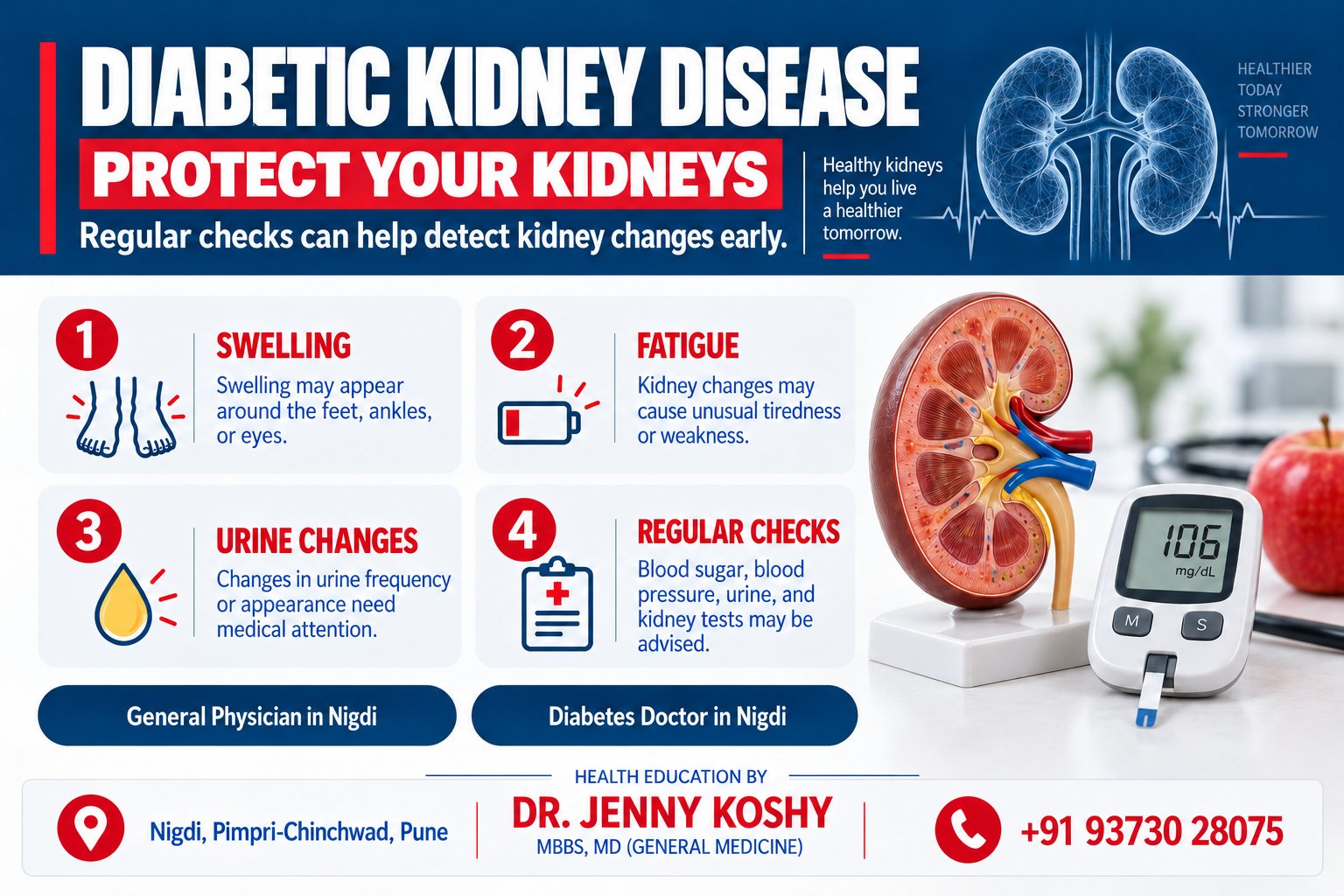
Diabetes can affect several organs over time, including the kidneys. High blood sugar may gradually damage the small blood vessels and filtering structures inside the kidneys. Kidney disease can develop slowly and may not cause noticeable symptoms in its early stages. This is why regular health checks, blood sugar monitoring, blood pressure checks, and appropriate kidney tests are important for people living with diabetes. A General Physician in Nigdi can help review these health factors, identify changes that need attention, and advise when further evaluation may be appropriate.
Understanding the Link Between Diabetes and Kidney Health
The kidneys filter waste and extra fluid from the blood and help maintain the body's fluid balance. When blood sugar remains high over time, it can affect the blood vessels and filtering units of the kidneys. This may allow albumin, a type of protein, to pass into the urine. Persistent albumin in urine can be a sign of kidney damage.
Diabetes is a major risk factor for chronic kidney disease (CKD). According to the CDC, CKD often develops gradually and may have few symptoms in its early stages. Regular testing can help identify kidney changes earlier, when they can be assessed and managed with appropriate medical care.
Signs That May Need Medical Attention
Kidney disease does not always produce clear symptoms at first. However, some changes may need medical assessment, particularly in a person with diabetes.
Swelling around the feet, ankles, legs, or eyes
• Unusual tiredness or weakness
• Changes in urine frequency or appearance
• Increased urination, particularly at night
• Persistently high blood pressure
• Changes in blood or urine test results
These signs can have many possible causes and do not by themselves confirm kidney disease. A healthcare professional may review symptoms, medical history, medicines, blood pressure, and test results before deciding what evaluation is appropriate.
Why Regular Kidney Checks Matter
For people with diabetes, kidney screening can include blood and urine tests. The National Kidney Foundation identifies estimated glomerular filtration rate (eGFR) and urine albumin-to-creatinine ratio (ACR) as important tests for assessing kidney health.
An eGFR is calculated from a blood test and provides an estimate of how well the kidneys filter blood. A urine ACR checks for albumin in the urine. Depending on the situation, a doctor may also consider blood pressure, blood glucose or HbA1c, creatinine, and other tests.
A single abnormal result does not always establish chronic kidney disease. Results may need to be repeated or interpreted alongside other findings. The timing and frequency of testing should be decided according to a person's health history and medical advice.
Managing Blood Sugar and Blood Pressure
Keeping blood sugar within the range recommended by a healthcare professional is an important part of diabetes care. Blood glucose monitoring, HbA1c testing, appropriate food choices, physical activity, and prescribed medicines may all be part of an individual care plan.
Blood pressure also matters because high blood pressure can increase the risk of kidney disease and can occur alongside diabetes. Regular blood pressure checks can help identify changes that may require medical attention.
There is no single target or treatment plan that is suitable for everyone. Age, other medical conditions, kidney function, medicines, lifestyle, and individual health goals can affect the advice given by a healthcare professional. Medicines should not be started, stopped, or changed without medical guidance.
Everyday Habits That Support Kidney Health
Daily habits can contribute to overall diabetes and kidney care. Useful steps may include:
Following the meal plan recommended for your health needs
• Staying physically active according to your ability and medical advice
• Taking prescribed medicines as directed
• Monitoring blood sugar when advised
• Checking blood pressure when recommended
• Attending scheduled health and kidney tests
• Discussing pain medicines, supplements, or other medicines with a healthcare professional when there are concerns about kidney health
When to Discuss Kidney Health With a Doctor
People living with diabetes can discuss kidney screening during routine medical visits, even when they feel well. This is particularly relevant when there are changes in blood pressure, urine findings, blood test results, or other health concerns.
A General Physician in Nigdi can assess the overall picture, review existing reports, and help determine whether additional tests or specialist evaluation may be appropriate. If kidney-related findings are identified, the doctor may coordinate care with a nephrologist or another relevant specialist.
Diabetes Care and Regular Follow-Up
Diabetes management is not limited to checking blood sugar on a single day. Regular follow-up helps track changes over time and allows treatment plans to be reviewed when needed. A Diabetes Doctor in Nigdi can evaluate blood sugar records, HbA1c results, blood pressure, medicines, lifestyle factors, and other health concerns as part of diabetes care.
Frequently Asked Questions
1. Can diabetes affect the kidneys?
Yes. Diabetes can damage blood vessels and filtering structures in the kidneys over time. Good management of blood sugar and blood pressure, along with recommended testing, can help identify and manage kidney-related changes.
2. Which tests are used to check kidney health in diabetes?
Common assessments include eGFR from a blood test and urine ACR to check for albumin. Doctors may also consider blood pressure, creatinine, blood glucose, HbA1c, and other tests based on the person's health.
3. Can kidney disease occur without symptoms?
Yes. Early kidney disease may cause few or no noticeable symptoms. Regular testing is therefore important for people who have risk factors such as diabetes.
4. Should I change my diabetes medicines if my kidney test is abnormal?
Do not change medicines on your own. Kidney function can affect how some medicines are used, so any adjustment should be discussed with the treating healthcare professional.
Protecting Kidney Health With Regular Medical Care
Diabetes and kidney health are closely connected, making regular monitoring an important part of long-term care. Changes in blood sugar, blood pressure, urine findings, or kidney function can provide useful information for medical assessment. If you live with diabetes, discuss an appropriate testing schedule with your healthcare professional and keep your medical reports available for review. Early assessment can help identify concerns and support timely management based on your individual health needs.